
Downtown Reno!
Check out downtown Reno's unofficial but still pretty cool guide which has maps, guides, stuff to do and more!Downtown Reno!
Check out downtown Reno's unofficial but still pretty cool guide which has maps, guides, stuff to do and more!Downtown Reno!
Check out downtown Reno's unofficial but still pretty cool guide which has maps, guides, stuff to do and more!Downtown Reno!
Check out downtown Reno's unofficial.Home /
In a previous recent post, you became familiar with the STAR Bond process, and the major entities in Reno seeking to explore the feasibility of STAR Bonds. One thing I didn't touch on so much is how rare STAR Bonds actually are on a nationwide level. Only two other states, Kansas (the original creator of the concept) and Oklahoma have passed STAR Bond legislation, with six other states looking into passing it. We modeled our STAR Bond legislation after Kansas', so it's only fitting we take a look at how Kansas used it and is still using it to create one giant connected retail destination. This is really important to look at, because I feel there is a right and wrong way to use this legislation. Kansas City did it the right way. It comes down to using STAR Bonds to create adjacent districts that compliment and feed each other, and not using STAR Bonds for piecemeal projects that are miles apart from one another.
So here's a brief breakdown of what happened in Kansas City. A couple of key provisions in Kansas' legislation are; STAR Bonds use the sales tax revenues generated in the established district to pay off the bonds, including the local and county portion of sales taxes and even state sales taxes if the state agrees to contribute its portion, and also, STAR Bond proceeds can only be used for land acquisition, infrastructure improvements and certain soft costs, but not for personal property (i.e. actual buildings the developer intends to build/own or is leased to the developer). I am not sure if that same rule applies to STAR bonds in Nevada.
In 1999, the Unified Government of Wyandotte County and Kansas City (called UG for short) approved their first STAR bond project, the Kansas Speedway, an 80,000 seat, state-of-the-art International Speedway Corp. Since its opening in 2001, this track has hosted IRL, Busch Series and NASCAR races every year.
At that same point in time, or shortly thereafter, UG used STAR bonds to acquire 400 acres ADJACENT to the Speedway, without having a predetermined use for the land. With the help of between $200 and $300 million in STAR bond incentives, UG was able to attract a number of key development partners to create Village West, a mixed-use and entertainment district to complement the already successful race track. Village West now includes a 710,000 s.f. furniture store, a 281-room lodge, a 7,200 seat minor league baseball stadium, RED Development's Legends Shopping Center, which includes a 14 screen movie theater, and 750,000 additional s.f. of shopping (see map below)
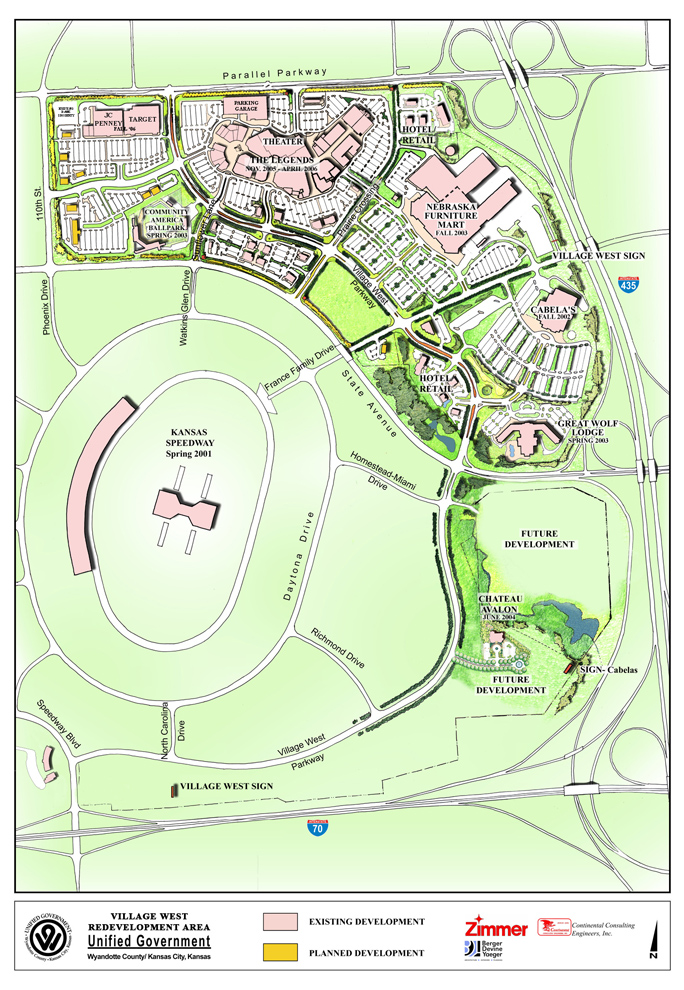
Following the success of Village West, UG also created another 375-acre STAR Bond district ACROSS THE HIGHWAY from Village West, and has a development agreement in place with Schlitterbahn to create a mile-long INDOOR man-made riverwalk (see renderings below), 300,000 s.f. of retail, an interactive marine park and a mammoth water park. The cost is projected to be more than $745 million.
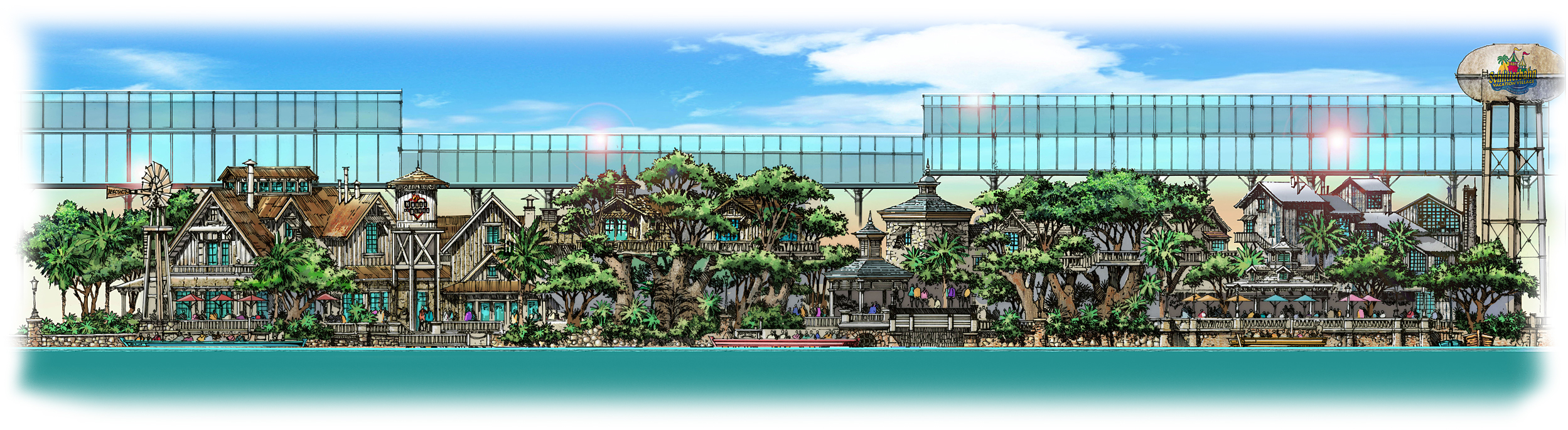
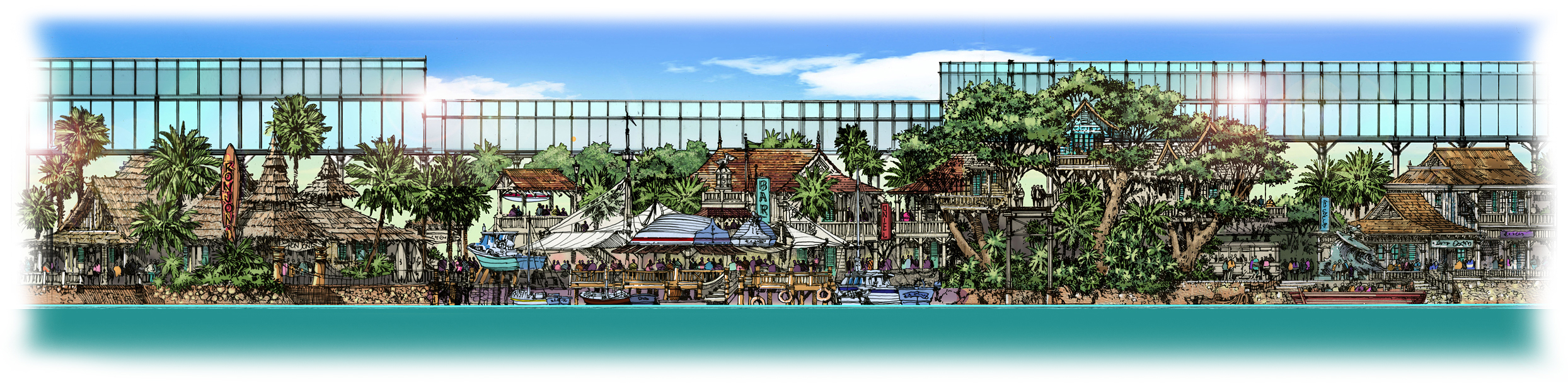
So, how does this relate to Reno? Well, Kansas City created three STAR Bond Districts adjacent to one another, and this ultimately is creating one gigantic entertainment destination that is more successful than if the 3 projects were on opposite sides of the city. The concept was so successful that the Village West development is due to pay off the STAR Bonds eight years before their scheduled 20-year amortization rate.
In downtown Reno, we have 3 possible adjacent STAR Bond districts; L3 Development's, Northern Nevada Urban Developments, and the Nevada Land/SK Baseball. Can you imagine the tourist impact it would have if all three of these were implemented and constructed? We would have a retail plaza that lines 3rd Street, we could possibly have a newer and better Fitzgeralds. Then a short walk up Virginia Street from Fitzgeralds we'd run into the western edge of NNUD's six square block shopping, retail and entertainment district which connects the University to downtown; then a short stroll south down Lake Street, and we'd have the baseball retail district where the Mizpah once stood, with the baseball stadium being the main anchor. All three of these projects would feed each other foot traffic; this was confirmed with the ReTRAC corridor study which basically directed a large rectangular pedestrian 'greenway' is envisioned that would move people down the riverwalk and back up the core of downtown via Third Street over to the baseball stadium. While these developers might see their projects as competing projects, I see them as complimenting each other, and if the developers are savvy and 'with it' enough, they can and will bring in retailers to fill those projects.
One piece of the puzzle that doesn't fit in with me is Grand Sierra Resort. I understand the concept of them wanting a STAR Bond, but yet after spending hours of research on the topic of STAR Bonds, I grow increasingly skeptical if it's the BEST use of STAR Bonds, unless something majorly spectacular is built there, like the waterpark. The Grand Sierra Resort group (prior to JP Morgan taking it over) submitted a STAR Bond feasibility request to the city on April 11, 2007, which included wording 'for waterpark, luxury spa, fountain show, exotic auto museum, and retail promenade.' This project as we all know was contingent upon GSR selling a certain percentage of their hotel-condo units to reach their next funding milestone, of which it was never clear if they reached that quota or not...but I am guessing not since the whole 'coming soon' waterpark concept was pulled from Grand Sierra Resort's web site.
Recently, it was revealed in a CAC meeting that Nevada Land II is trying to or thinking about acquiring the Grand Sierra Resort from JP Morgan, and possibly in some form 'partner' with GSR's current troops. Nevada Land II is submitting their own feasibility request for their own STAR bond "for a large retail project in their current parking lot" as RDA staff put it in that CAC meeting. Hmm...retail project? The wording of the staff report for the new STAR Bond MOU/staff report/agenda item for GSR is very different than the original STAR Bond request wording. It basically says 'commercial development specializing in destination retail and entertainment venues.' That's a lot more general than the previous MOU with GSR. So a lot of questions arise. Would the new owners carry out the original plan and vision of Tom Schrade, with one of the largest indoor water parks in the nation, with an exotic car museum and 'fountain show that that will make the Bellagio's fountains look small'? Or will it become more retail driven and less entertainment driven? Is the waterpark being phased out for some other major entertainment concept? Is it going to end up being an uber-fancy mall? To use STAR Bonds at GSR where land is cheap anyway to subsidize development that competes with what could go downtown using STAR bonds is a bit disheartening.
In my opinion, if STAR Bonds are issued to GSR, it should be for something world-class, and Tom Schrade's original vision. The Waterpark should be a condition of any STAR Bond issued to them. For example, another Kansas project wasn't qualified for a STAR Bond until it added a 70,000 s.f. aquarium that would draw in more out of town visitors (750,000 additional to the aquarium) per year. Yet under the same rules, the City of Witchata has slated $14.72 million in sales tax revenue bonds to its river improvement projects downtown.
I urge the council to give priority to the 3 STAR Bond projects downtown, as the three preferred STAR Bond projects, if for some reason not all five can be approved. L3 Development has invested over $200,000,000 into downtown, and NNUD has spent years spending close to $30,000,000 to acquire land in one specific area of downtown to develop. And out of the 3 downtown STAR Bond interests, priority should be given to those two who have already spent tens of millions in downtown.
To be honest, I am still a little leery of the Baseball Folks' master plan. We have given them a lot of concessions thus far, and with the stadium completion less than a year away, I haven't heard them announce any retail lease signage yet. When Legends at Sparks Marina and Summit Sierra Mall were announced as projects, tenants were announced and signed on months before dirt was moved. Redevelopment Administrator Mark Lewis said months ago that prospective retailers were being flown in to tour the site. So what happened with that? We haven't heard a peep since. Maybe if I knew progress was being made with the baseball district retail I would feel more comfortable with it :)
After the latest redevelopment agency meeting, where Herb Simon was referred to as the 'Cadillac of developers' and inappropriately put up on a big pedestal in front of the other developers also seeking assistance (NNUD and L3 Development), and then running through all the concessions given to them it almost seems like the redevelopment agency is ecstatically focused on this one particular deal with Nevada Land, when in reality, L3 Development's and NNUD's upcoming projects could have just as much if not bigger economic impact than a stadium with a block of retail around it. NNUD's project literally connects downtown to the University, and completely transforms one of the most blighted parts of downtown. When in the recent history of Reno has a developer acquired so much adjoining downtown land privately? Never. And Leal's projects fulfill an original vision way back when the train trench was first put in; a thriving 3rd Street district that revitalizes the dead zone between the riverwalk and the casinos downtown.
So, in conclusion, I would ask that the City Council/RDA;
1. Reconsider the extent that Grand Sierra could/should be helped with STAR Bonds, when at least in the public's eye, there are no solid plans in place for this property. I would feel more comfortable if the nation's largest indoor water park, the fountains, the luxury spa and the exotic car museum were made a condition of financial assistance. Otherwise, it would be a poor use of STAR Bonds. This property is isolated from the rest of Reno's entertainment sector, so whatever it builds as a result of STAR Bond assistance needs to stand on its own merit, needs to draw in out of state tourists and locals alike. To me, the opportunity to pursue 3 massive projects downtown which would all feed each other tourists is a better use of STAR bonds. Much like Kansas did, but on a smaller scale.
2. Don't be stand-offish or bullish about the other possible STAR Bond projects downtown, because all 3 built together could transform downtown Reno into a destination resort city within just a couple years.
I understand that each STAR Bond request and MOU will be processed and evaluated on its own merit, but somehow there should be a measure of the positive impact multiple STAR Bond projects downtown could have being adjacent to one another as well.
Kansas has the distinction of being praised throughout the nation because of their successful use of STAR Bonds. I don't want Nevada to be the state the entire nation looks to as an example of how NOT to use STAR Bonds. The faster the STAR bonds are paid off, the faster the community benefits from the full sales tax generated by these projects, instead of a portion of it having to pay off the bond. The more successful a project is, the faster the bond will be paid down. At least, that's how it works in Kansas. Let's create a great discussion on this. Comment below!
Comments:
Post your commentsPosted by: indamernreno - 7/23/2008 8:56:07 AM
I agree that a STAR bond should only be given to the GSR for the indoor water park. The original GSR expansion plans look to change the whole Reno-Sparks area. I am saddened to see it scrapped and that is what STAR bonds should be used for, a major community changing project. The original GSR in my mind qualifies as does legends in sparks(althought not to the same degree as the original GSR expansion). The plan to link the University and Downtown with greenbelts north of 1-80 and retail/housing/entertainment on the south border of 1-80 sounds awesome. I dont know the chance of that happening anytime in the near future but I would warn the city council/co. commission to exercise care when awarding STAR bonds. They should be used on projects that have a real good chance of actually being built. Bad to have too many STAR bonds out there and seeing one tied up on a "pipe dream" would be very sad. Been around Reno long enough to see many, many great projects go away.
Posted by: DodgeBall73 - 7/23/2008 10:26:24 AM
Great post dude. I thought every state had star funding. Of all the states to come up with this, it's funny Kansas did. They are smarter than the average bear.
Posted by: Sara - 7/23/2008 10:54:25 AM
I have some experience with this, I did my term paper on Sales Tax Anticipated Revenue bonds. Each bond is analyzed under a very powerful microscope. It's not possible for a 'pipe dream' project to receive that kind of funding, just like tax increment funding. In addition, there are many qualifications a project has to meet to qualify for one, which is what the mou is for. Great article. Kansas used it more as a land acquisition tool and to pay for freeway improvements/offramps to entice developers to that area. Our entertainment district is downtown, and that's where the the City of Reno's focus should be, particularly with all the money they have invested in downtown in the past few years.
Posted by: Revi - 7/23/2008 11:30:54 AM
I would like to know more about the north east downtown project. I have barely heard anything about this, except for on this web page. Is this the same project you have that downtownmap for on your home page? If so, that area is scumville right now. It needs a major facelift before people start taking downtown seriously. And Virginia Street between 2nd street and 4th street.
Posted by: PupTent911 - 7/23/2008 3:09:03 PM
I vote for the choo choo plaza because I will be moving into the Montage and will be a great place to hang.
Posted by: Greg Pachio - 7/23/2008 3:24:31 PM
I like the idea of demolishing six blocks of the most obnoxious putrid part of downtown. Are these guys for real and have funding? Not a 'Wingfield Towers' quick pitch n run?
Posted by: DodgeBall73 - 7/23/2008 8:57:52 PM
I agree with this perspective. After spending millions to improve downtown, the city and county should be focusing their energy on strengthening downtown and the urban core.
Posted by: David W - 7/23/2008 10:17:02 PM
Do you know how many times we were promised the waterpark was going to break ground? I remember seeing 3 or 4 articles about it in 2007. A couple in early 2008. Oh it will break ground this summer. Oh it will break ground this fall. Oh the waterpark is coming in spring 2008. Riiiiiight sure it is. Oh Kobi Karp towers completion date 2009. I feel sorry for the poor souls who bought hotel condos there under the guise and promise of all this. At least they got a Dolce!Demolish the entire property and use the 140 acres to build the largest family resort on the west coast, kind of like the resort you showcased is being built in Kansas. Schliterwhatever its called. Water rise and slides everywhere. Connect the entire property with a lazy river...because I am lazy.
Posted by: Christian Fey - 7/24/2008 9:44:56 AM
I can see no reason to give the GSR any STAR funding for their development purposes. As you said, it is not in the downtown tourism and entertainment area of the city. If we expend more money on one casino (where it is hard enough to park already) without a formal plan, we are opening ourselves to a failed attempt to draw people to the city. I agree that if we go with STAR bonds, the rundown part of downtown would be the optimal place for a retrofit. Reno has gone from a (excuse my term) trash hole, 10ish years ago, to an up and coming focal point that is now known more and more for the arts and cultural aspect than the allure of the casinos. We need to, and owe it to our city, to push developments through that will strengthen this ideal and get more people coming who are going to help our economy.
Posted by: Casey Black - 7/24/2008 1:43:12 PM
I have an archive pass to rgj, so I took a look for you:
June 8, 2006 - "Reno Hilton sale gets initial approval" - Gambling regulators gave initial approval Wednesday for the $151 million sale of the Reno Hilton to Grand Sierra Resort Corp., which plans to spend another $140 million overhauling the property. Among the plans are a Dolce restaurant backed by celebrity investors, including Ashton Kutcher of "That 70s Show," a nightclub featuring raunchy Las Vegas comedian Jeff Beacher, and the largest indoor water park in the U.S.
February 2, 2007 - "Big Things Planned for Grand Sierra Resort" - Grand Sierra Resort announced plans to begin building the largest indoor water park in the nation this year, and it will enter a partnership with Florida-based Nikki Beach clubs to build a new 200-room hotel.
April 10, 2007 - "Grand Sierra Resort Seeking Tax Break" - Grand Sierra Resort is seeking a sales-tax break to pay for a "rocket water roller coaster," and the rest of a 150,000-square-foot indoor water park. We need to get the bonds started quickly President/CEO Michael Carsch said.
April 12, 2007 - "Cashell to GSR: Hire Nevadans to build water park if you want STAR bonds" - Reno Mayor Bob Cashell on Wednesday gave Grand Sierra Resort officials fair warning that he expects local contractors to build its proposed indoor water park if they want the city to approve STAR bond financing for the project. One way or another, Cashell said the city will require "teeth in the contract to hire Nevadans. Im not the mayor of Tucson." The City Council then unanimously approved a memorandum of understanding. - - - - The first MOU was definitely for an indoor water park. If all MOUs last 150 days, then the MOU approved April 2007 would expire next month. Thats probably why Nevada Land II is seeking a new one. So they are still seeking help, except now its under the radar (no rgj articles about the new mou) and suspiciously generic.
I agree with this article...Grand Sierra Resort should only get help for the waterpark. Oh and by the way, they are going to have to up that square footage to about 200,000 to be the new nations largest indoor waterpark (they opened a 173,000 s.f. one in Sandusky)
Posted by: PupTent911 - 7/25/2008 6:32:39 AM
The City shouldn't help Grand Sierra Resort at all if the Grand Sierra Resort, old owners or new, is not going to build what we promised. The baseball people, who already got our fire station.
Posted by: James P - 7/25/2008 7:22:05 AM
It is a free market. Grand can build whatever they want on their property. However if the city gives them financial assistance to build fancy retail, new owners or old, they are are stabbing their own downtown retail projects in the back.
Posted by: Crystal - 7/25/2008 10:54:29 PM
Lots of developers have blighted lots. I can name some, Grants Landing, that Waterfront lot, several developments that are in Spanish Springs. It's called a housing bubble. Half of downtown is blighted. I would rather they fix up blocks of blighted property downtown than blighted property at Idlewild, wherever that is.
Posted by: Devin - 7/25/2008 11:04:17 PM
I think all the projects should be judged on their own basis, including grand sierra resorts and the others. Thats the only fair way to do it. If the government had influence to give preference to one project or the other, that would be bad. And land with overgrown weeds doesn't make someone a bad developer, or else half the people on my Akard Way block would be guilty.
Posted by: Mike Van H - 7/25/2008 11:07:28 PM
Hi Homey, I removed your comment it was a little bit too personal-attack oriented. If there's a slightly nicer way you could phrase your concerns over that project, that would be super cool. I just want to stay aay from personal attacks on anyone.
Posted by: CPAO - 9/8/2008 11:14:33 PM
I am a Kansas City resident. I urge each and everyone of you to request a copy of the Kansas City Star Bond Audit. While on the surface, it all sounds great....the taxpayers pay the price in the end.
Posted by: Wmice - 3/18/2010 7:07:41 AM
STAR BONDS....are a politician's SCAM! Buy the land cheap...put it into a no-name Trust...neglect the zoned area....have your lawyer petition for a TIF re-zoning...get your friendly "developer" to issue BONDS...underwritten by our pension funds...losing tax dollars....and claiming JOBS for Main Street