
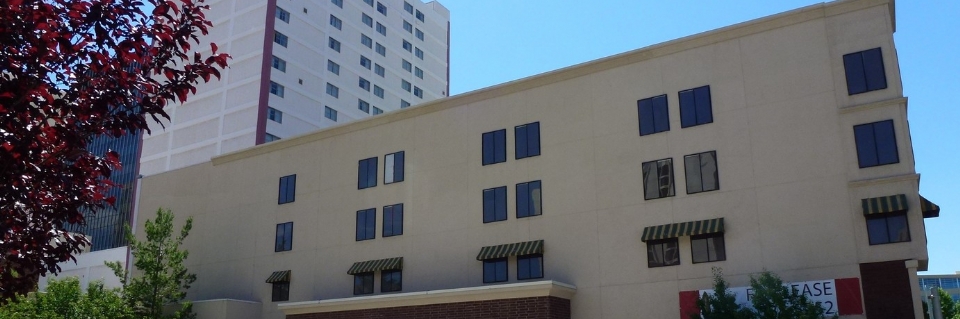
So, not to boast a little bit, Downtownmakeover has now been around 20 years. 20 years! I rarely do long form articles/posts, but I figure with all the recent talk of downtown, both good and bad, the many misconceptions about downtown lurking about, I figure it’s time to talk about the unique challenges downtown has. This is a great primer for those new to Reno wondering what the hell is up with downtown Reno, those who don’t understand the mechanics of downtown and simply resort to blaming local govt, and those who like, myself, have a genuine passion for downtown and urban living.
Virginia Street: The Elephant in the Room
Walk down Virginia Street today, past the Reno Arch and through the heart of what should be northern Nevada's most vibrant urban corridor, and you'll see something that would have looked familiar twenty years ago: dark storefronts, faded "For Lease" signs, and block after block of casino walls with no windows, no entrances, and little life. According to a placemaking study commissioned by the City of Reno and conducted by Gehl Studios, 70 percent of Virginia Street's frontage is considered "dead"—meaning no active businesses, no street-level engagement, nothing to draw people in.
The numbers are stark. Today, roughly 5,000 residents call downtown home. Yay for them! I applaud them for embracing urban life in Reno. I’m one of them. BUT, The median household income sits at $66,956, well below Washoe County's median of $85,600. Nearly 40 percent of downtown's population is aged 50 or older. And perhaps most telling: less than 10 percent of downtown's housing stock has been built in the last twenty years.
This isn't a story about economic collapse or natural disaster. It's something more frustrating: a slow-motion stall that has persisted despite consistent efforts, public investment, and genuine optimism that I’ve expressed for 20 years. The
question that haunts downtown advocates like myself, city officials, and longtime residents is simple but maddening:
Why has the central core not turned the corner, even as the downtown population has grown? And what would it actually take to change that 20-year trajectory? By any normal measure, downtown Reno’s core should look very different than it did 20 years ago.
Thousands of new residents now live within a mile of the arch. New student housing mid-rises and market-rate apartments line the outskirts of downtown and the university edge. The economy has diversified beyond gaming. And yet, the abundance of aging facades and empty spaces are what Reno citizens have burned in their memory, despite many success stories in some neighborhoods of downtown. Most discussions, comments and thoughts always revert right back to Virginia Street, some of its side streets, and the casino core.
How We Got Here: A Short History of Big Ideas and Half-Finished Eras
Downtown Reno has been trying to reinvent itself for more than half a century. A 1969 Downtown Development Plan warned that if the city didn’t adapt, the core would “abdicate its role as the heart of the city and become a lifeless semi-slum.”
In the late 1990s and 2000s, the newly formed Reno Redevelopment Agency (RDA) leaned in heavily on transforming downtown: The Riverwalk, the movie theater and subsequent retail corner parcel on Sierra and 1st, Riverside Artist Lofts, the National Bowling Stadium, the Truckee River Whitewater Park, West Street Market, new lighting and trees on Virginia Street, the parking galleria and ground-floor retail in it, the now-named Believe Plaza, West Street Plaza, the Automobile Museum, Greater Nevada Field, the old Post Office conversion. There’s no doubt downtown would be in a much worse place today if it weren’t for some of these critical projects. Some, downtown could have lived without (I’m looking at you, Reno Events Center and Ballroom). The price the RDA would pay following this growth spurt, though, crippled the redevelopment agency as simply a debt payor for 16+ years. It’s only now on the verge of being solvent again.
Beginning in 2005, I started to chronicle a different wave: lofts, condo proposals and adaptive reuse projects meant to diversify away from pure gaming – the Montage, Palladio, Riverwalk Tower, Belvedere, university-oriented housing, and a series of ambitious but ultimately cancelled mega-projects like the West 2nd Street District, the Tessera District, The Waterfront Towers, Wingfield Towers and the list goes on and on.
Some things absolutely changed: More residents, a better riverfront: investment along the Truckee moved the city’s front porch from smoky casino floors to patios and paths.
But the core casino blocks of Virginia Street and several side streets didn’t experience the same reinvestment. Many properties remained in the hands of a small group of legacy owners; ground-floor spaces stayed empty or underused; and the urban fabric between new residential hotspots and the river never quite healed. A sort of donut of redevelopment formed, with surrounding neighborhoods like the business district, south downtown, Powning, the University district, MidTown, and more recently East 4th Street, all experiencing demand and development in one form or another.
The Casino Problem Nobody Wants to Talk About
Ask anyone who has studied downtown Reno's challenges long enough, and the conversation eventually lands in the same place: the casinos. Not the gaming industry itself—which remains an economic engine for the region—but the physical reality of what major casino properties have done to Virginia Street's urban fabric.
The ROW—the unified brand encompassing Circus Circus, Silver Legacy, and Eldorado—occupies the largest footprint of real estate on Virginia Street. Their slogan, "the city within a city," captures both their business model and the problem. These properties were designed to keep visitors inside, cycling through restaurants, bars, gaming floors, and hotel rooms without ever stepping onto the sidewalk. The result is what urban planners call "dead frontage": multi-block stretches of windowless walls, parking garage entrances, and fake storefront facades that lead nowhere.
"They have the largest amount of real estate on Virginia Street with little to no access or appealability whatsoever," one community member noted during a public meeting about downtown revitalization in 2023. "That is a huge issue that needs to be addressed."
Adding insult to injury, every former casino that was converted to residential didn’t develop or lease their ground floor spaces; Riverwalk Tower and it’s boarded up west side of West Street, The Belvedere’s still empty former casino space and an entire tower that was never completed or opened, The Montage’s (formerly Golden Phoenix) cavernous empty retail spaces where the casino once operated, and more recently, Reno Revival/Reno City Center where Harrah’s once operated, sits mostly shuttered but with glimpses of hope the project will fire up again, with the Mint bar recently opening temporarily. There are exceptions; the Renaissance with their bocce ball courts and Whitney Peak’s indoor climbing gym and conference spaces, both from the vision of developer Fernando Leal, and 3rd Street Flats, formerly the Kings Inn, converting its casino floor space to several smaller retail units.
During the Gehl Studios placemaking process, consultants noted that "locals do like casinos, but they don't go to the casinos on Virginia Street." The resort model that works in Las Vegas—self-contained entertainment complexes drawing tourists from across the country—translates differently in a smaller market. The days when tourists "buzzed up and down Virginia Street from casino to club to showroom," as one observer put it, are long gone. Let me repeat that for the Reno natives who wish for the old Reno to make a roarin' comeback. It. Will. Never. Come. Back. Harsh? Yes. Reality? Yes. You can thank legalized gambling in California for that. And one might even ask, "What would downtown Reno look like had it never built 26+ casinos and hotels downtown in the first place?" Would it have been easier to redevelop downtown Reno NOW, had that never existed?
What remains is the urban doughnut: activity at the edges—along the Riverwalk, near UNR, in the emerging Brewery District—but a hollowed-out center where the historic casino core sits largely inert, punctuated only by special events and weekend nights.
The Retail Space Problem: Too Big and Too Risky
To understand why empty storefronts linger, it helps to look at where small businesses do choose to open – and what they pay for the privilege.
A scan of recent listings on LoopNet and other brokerage sites suggests a clear pattern:
MidTown Reno – along South Virginia and the Wells corridor – routinely advertises small storefronts in the $1.75–$2.50 per square foot NNN range for renovated, street-active space with strong local foot traffic.
Downtown core spaces along Virginia near the arch, when actively marketed, often post asking rates in a comparable band on paper, but with caveats: large floor plates carved from former casino or mall interiors, dated façades, high CAM charges and costly tenant improvements. Shorter lease terms and higher perceived security costs push effective rents higher relative to revenue.
Region-wide retail reports back this up: the broader Reno-Sparks retail market sits near a 4% vacancy rate with average asking rents around $1.50/sf, but those averages mask weaker demand in older, tourism-driven submarkets compared to neighborhood centers that serve daily needs.
In simple terms, a restaurateur or boutique owner can:
• Pay similar (or slightly higher) base rent in MidTown,
• Get help with tenant improvements and a growing residential customer base,
• Avoid the reputational baggage and late-night volatility of the casino blocks.
So even when “for lease” signs downtown list a number that looks competitive, the risk-adjusted cost often isn’t.
Case in point: When 100 North Sierra Street (former JC Penney building) subdivided its ground floor space, the new spaces filled rather quickly with a restaurant and bar. Compare to the Woolworths Building, whose cavernous ground floor space only briefly housed an antique shop. There are a few exceptions, such as Birdeez in the former antique mall on Sierra Street. But they are exceptions. Downtown’s most popular spaces that are almost always filled with retail, are often the smallest and most turn-key ready with little tenant improvements needed. From the Basement at the Post Office to the Palladio to the movie theater building retail spots.
The Population Problem: You Can't Have Retail Without Residents
In 2019, Alex Stettinski, then-executive director of the Downtown Reno Partnership, put the challenge bluntly: "A lot of businesses that we would like to recruit and approach, we haven't even started because we already know that we haven't reached the critical mass in order to make a retail store in this environment pencil for them."
The math is unforgiving. According to data compiled by the Downtown Reno Partnership, the downtown area has around 5,000 residents. The average household size is just 1.4 people. For most national retailers—and even many local entrepreneurs—the customer base simply isn't there.
Big box stores that used to call downtown home, don’t need to anymore as Reno expanded and created several ‘mini-downtowns’ including Damonte, Spanish Springs, West 7th/Mae Anne area, home to scores of chain stores and big box stores. Couple that with the online e-commerce boom, and people don’t NEED to come downtown to shop, the only draw would be unique stores that don’t exist elsewhere.
But there are signs this may be changing. City Revitalization Manager Bryan McArdle announced in this year that downtown Reno could see its population double with roughly 2,500 new housing units recently completed or on the horizon. The last few years has been the biggest downtown residential growth spurt in more than 40 years. Projects like the 368-unit Ballpark Apartments near Greater Nevada Field, the Winter Street apartments, the renovation of Ross Manor/Westlyn, the newly opened Gibson and 245 North Arlington apartments, student housing, represent a wave of development that could push downtown's population toward 6,000 or more.
Several more projects such as housing on Lake Street, east Commercial Row, and the site of the former CAC on 4th Street, are promising.
"When people start moving down here, the businesses feel more comfortable to start coming down here," McArdle told reporters. "You get more coffee shops and eateries. Those residents will need services. And the goal is to keep that growth and housing units going."
Yet even as residential construction accelerated, the retail gap persists. It's a chicken-and-egg problem that has bedeviled downtown for decades.
The Grocery Store Test: A 40-Year Failure
Nothing illustrates downtown Reno's retail dysfunction quite like the grocery store question. "We haven't had a real grocery store in Downtown Reno since 1986," Shannon Dobbs, president of the nonprofit On Common Ground, noted in 2018. "Companies won't come here because the area is almost 50 percent under poverty level." Note that he mentioned that almost eight years ago.
Large retail grocery outlets, Dobbs explained, are often mandated by corporate policy to avoid areas where 40 percent or more of the population falls at or below the poverty level. Downtown Reno crosses that threshold.
The result is what public health experts call a "food desert"—an urban area where residents lack easy access to fresh, affordable groceries. Downtown residents who want to shop for food have limited options: the walkable Great Basin Community Food Co-op, a worker-owned cooperative that has great healthy options but isn’t exactly a fit for those on a budget; or a trip to Raley’s or Savemart on the edge of downtown, or Sprouts in MidTown…none of them really walkable from many residences in the downtown core.
The new renderings for Reno Revival—the renamed redevelopment of the former Harrah's property—prominently feature a grocery store in multiple images. "Pleeeeeeease give what downtowners have been begging for, for the past 15 years," I wrote upon seeing the plans. The plea captures forty years of frustration.
Midtown's Success Story: What Downtown Isn't
Just a mile south, a different urban experiment has unfolded. Midtown Reno—the stretch of South Virginia Street between downtown and Plumb Lane—has emerged over the past fifteen years as exactly what downtown aspires to be: walkable, vibrant, filled with locally-owned restaurants, bars, boutiques, and services.
The contrast is so noticeable. Midtown's building stock consists largely of older, smaller structures with ground-floor retail and affordable lease rates because the spaces are smaller. Midtown's spaces are typically small enough—often under 2,000 square feet—that entrepreneurs can experiment without betting the farm.
The Midtown renaissance was enabled in part by lower overhead: It allowed small businesses to come in with a bit less overhead, build up their business, and create the mass of bars and restaurants and retail that was needed.
Downtown Reno lacks this kind of building stock. What it has instead are "mega blocks"—entire city blocks occupied by single resort properties—and former casino buildings with cavernous ground floors that are difficult and expensive to subdivide. When the challenge is filling a 50,000-square-foot former gaming floor, the number of potential tenants shrinks dramatically.
Ownership, Fragmentation and the “Zombie Building” Problem
Long-term property ownership patterns are another piece of the puzzle. Many central-core parcels are controlled by casino companies, family trusts, or absentee investors who can afford to wait. Buildings with obsolete gaming floors or empty upper-floors sit in limbo: too expensive to bring up to modern code for housing, but no longer competitive as casinos. I’m looking at you, Truckee Lane Building, Byington building, the former Riverboat building, and the still-stocked closed gift shop on Virginia and 2nd.
In practice, this creates “zombie buildings” – structurally sound properties with no immediate economic use, but also no financial pressure on owners to lower rents, sell, or reinvest to open the properties.
Nevada’s property tax system reinforces this inertia. State-wide caps on annual property tax increases and limits on how much assessed values can jump mean that holding under-utilized land downtown is relatively cheap compared with states that tax land value more aggressively.
The Boise Comparison: What Smart Growth Looks Like
Reno and Boise share more than people might think. Both are mid-sized Western cities with populations in the 250,000-350,000 range. Both serve as regional hubs with universities, growing tech sectors, and access to outdoor recreation. Both emerged from historic economies—mining and gaming for Reno, agriculture and timber for Boise—into more diversified modern identities.
But downtown Boise has thrived where downtown Reno has stagnated. According to the Downtown Boise Association, downtown Boise has more than seven times the rate of storefronts per square foot compared to any other area in the city. Some 86 percent of downtown Boise's retail sales come from people who don't live there—visitors drawn by the district's walkability, restaurants, and shops. A remarkable 96 percent of downtown Boise businesses are locally owned.
The difference wasn't inevitable. In the 1970s and 1980s, Boise faced the same urban renewal pressures that reshaped many American downtowns. City leaders proposed demolishing most of downtown's historic buildings to construct a regional shopping mall. The plan nearly succeeded.
What saved downtown Boise was a combination of citizen resistance, thoughtful planning, and—perhaps most importantly—the decision to pursue mixed-use development rather than a single-purpose retail anchor. Instead of a mall, Boise got Grove Plaza, 8th Street pedestrian areas, and incremental infill that preserved the district's historic character while adding housing, offices, and street-level retail.
"The existing sustainability of Boise's mixed-use scene owes its dues, in a large degree, to the failed mall," wrote one urban analyst. "The absent downtown mall successfully persuaded the Boise community and leadership to bypass a failed method of redevelopment."
Reno took a different path. Rather than preventing large-scale single-use development, downtown Reno became defined by it. The casinos that emerged in the mid-20th century were, in essence, vertical malls—self-contained retail environments that competed with rather than complemented the surrounding streetscape.
The Tools at Hand: What the Reno Redevelopment Agency Can Do Now
Despite the structural challenges, Reno isn't without options. The Reno Redevelopment Agency, established in 1983, is finally becoming re-energized again thanks to increased property tax rolls from many of the new projects built within RDA districts. I’m excited to see what the new list of priority projects will be in the coming years.
Here's how TIF works: When a redevelopment area is established, the existing property tax base is frozen. As new development increases property values, the additional tax revenue—the "increment"—flows to the redevelopment agency rather than to other taxing authorities. These funds can then be reinvested in the district to fund infrastructure, incentivize development, or subsidize projects that wouldn't otherwise pencil.
Reno's approach to TIF is notably conservative. Unlike many cities, Reno now uses a "pay-as-you-go" model—meaning the city doesn't issue bonds or take on debt to fund projects. Reimbursements only occur after a Certificate of Occupancy is issued, the property is assessed, and increased taxes are actually paid. If a project fails or property values don't increase, no public funds are spent.
This approach has its advantages—reduced financial risk for the city—but it also limits the agency's ability to make transformative investments. Recent TIF deals have included workforce housing projects, townhome developments, and the incentive package for Grand Sierra Resort's arena expansion.
What the RDA Could Do More Aggressively As Its Next Phase
Targeted retail subsidies. The RDA could create a storefront activation program that subsidizes lease rates for qualifying businesses in targeted locations—particularly along Virginia Street's dead zones. Portland, Oregon recently launched a $25 million Downtown Business Incentive credit program specifically to encourage commercial lease signings in hard-hit districts. It would be like the ReStore program multiplied by several times. Tap into future TIF revenue to fund it.
Small space subdivision incentives. Rather than waiting for developers to convert massive casino floors into usable retail, the RDA could provide construction subsidies to property owners willing to subdivide large spaces into smaller, more leasable units.
Facade improvement expansion. The existing ReStore program provides grants for exterior and interior improvements to downtown businesses. The program could be expanded and made more aggressive, with larger grants and faster approval processes for properties along Virginia Street.
Public market development. Many successful downtowns anchor their retail districts with public markets that provide affordable entry points for food vendors, artisans, and specialty retailers. The RDA could acquire or lease a prominent downtown property and develop it as a multi-vendor market hall, a larger version of West Street Market.
Casino engagement mandates. As a condition of future TIF deals or other city incentives, the RDA could require casino properties to activate street-level frontage—converting parking garage ground floors to retail, eliminating blank walls, or creating genuine storefronts where fake facades currently exist.
The State Law Changes That Could Transform Downtown
Unfortunately, most of downtown Reno's deepest challenges require solutions beyond what local government can provide. For the past 16 years until this year, the City of Reno didn’t even have the redevelopment agency as a tool. I hear a lot of ‘Get rid of the Mayor and council and that will fix downtown.’ Uh, no. My site has been around for three different mayors, four-ish different council bodies, three redevelopment managers/directors, two or three city managers. They ALL wanted to fix downtown. They ALL run into the same hurdles and roadblocks due to state laws. Some made not-so-great decisions on using bonds to build things that didn’t really benefit downtown much, and others had some great ideas but no power to implement them. And so it will be that the newly elected Mayor and council members next year will face the same restrictions and roadblocks, powerless to do anything but enforce existing code, use the RDA intelligently as a tool and/or ask the state to change state laws to give them more flexibility and tools. Nevada state law could be amended in several ways to give cities more tools for downtown revitalization.
Enterprise Zone Expansion
Unlike many states, Nevada lacks a robust enterprise zone program that provides targeted tax incentives for businesses locating in distressed areas. States like Illinois and Colorado offer investment tax credits, jobs tax credits, and sales tax exemptions for businesses in designated zones. A Nevada enterprise zone program targeted at downtown cores could provide the kind of incentive structure that has worked elsewhere.
Rent Subsidy Authorization
New York City's Commercial Expansion Program provides qualified tenants in targeted areas with rent credits of up to $2.50 per square foot for three to five years. Nevada law could authorize similar programs, enabling cities to subsidize commercial rents in priority areas. This would directly address the lease rate challenges that prevent small businesses from locating downtown.
Ground-Floor Activation Requirements
Some jurisdictions require new developments or major renovations in downtown districts to include active ground-floor uses—retail, restaurants, services—rather than parking, storage, or blank walls. Nevada law could enable cities to impose such requirements through zoning or development agreements, preventing future projects from replicating the mistakes of the casino era.
Main Street Program Enhancement
Nevada has adopted a statewide Main Street program through the Governor's Office of Economic Development, but its funding and authority are limited. An enhanced state Main Street program could provide dedicated staff, technical assistance, and matching grants to communities pursuing downtown revitalization, modeled on successful programs in states like Texas and Iowa.
Property Tax Reform for Mixed-Use Development
Nevada's property tax structure doesn't distinguish between downtown mixed-use buildings and suburban strip malls. A reformed assessment system could provide preferential treatment for buildings that include both residential and ground-floor commercial uses, encouraging the kind of development that creates walkable, vibrant streets.
Stronger Tools for Chronic Vacancies
The issue: Zombie buildings and long-term vacant storefronts impose real costs on neighboring businesses and the public realm, but owners face relatively little financial pressure to act.
Potential state-enabled tools to fix this:
- Vacancy taxes or surcharges on commercial properties left empty for more than a set period, with revenues dedicated to a downtown revitalization fund. Cities like Washington, D.C., and Vancouver, B.C., have used versions of this to push owners toward leasing, reinvestment or sale.
- Blight-based special assessments that allow local governments to recover the public costs of policing, boarding and repeated code enforcement at chronic problem buildings.
Enabling Nevada cities to adopt these tools – even on a pilot basis within designated redevelopment areas – could change the economics of sitting on empty space.
Modernizing Tax-Increment and Redevelopment Districts
Existing Reno redevelopment areas are aging, and state rules limit how flexibly TIF can be used for newer priorities like small-scale housing, upper-floor residential conversions or climate-oriented retrofits.
Potential reforms:
Allow cities to create new, narrowly drawn urban infill TIF districts focused on housing and storefront activation, with clear affordability and design requirements.
Expand eligible uses of increment revenue to include low-interest loan pools for code upgrades and seismic work in older buildings – a major barrier to converting casino hotels into apartments or student housing.
Other Western states, including Colorado and Utah, have modernized their TIF laws in recent years to encourage exactly this sort of downtown reinvestment.
Land-Value-Oriented Property Tax Options
The issue: Nevada’s property tax caps can unintentionally reward underuse of valuable land, making it cheap to warehouse parking lots and partially occupied buildings in the city’s most connected locations. The Nevada Independent
Potential reforms:
Give cities the option – within strict limits – to pilot split-rate or land-value-biased property taxes in redevelopment areas, taxing land at a higher rate than improvements. This can encourage owners to either build more intensely or sell to those who will.
Zoning and Design Tools for a Post-Casino Core
The issue: Conventional zoning alone rarely fixes built-form problems created by past mega-projects.
Potential reforms:
Authorize cities to adopt strong form-based codes with mandatory build-to lines, active ground-floor requirements and maximum block lengths in special downtown districts, even when that conflicts with older casino-oriented standards. Allow local “overlay districts” that streamline approvals for projects meeting strict design and use criteria – essentially trading speed for quality. Boise’s modern zoning reforms and design overlays provide a reference for how this can look in practice.
The Harrah's Test: Will This Time Be Different?
If there's a single project that will determine downtown Reno's trajectory for the next decade, it's Reno Revival—the renamed redevelopment of the former Harrah's property.
The property has had a tortured history. Harrah's closed during the pandemic. The site was acquired by CAI Investments and rebranded as Reno City Center, with plans for residential, retail, and office space. The project went through bankruptcy proceedings before emerging under new ownership with Madison Capital Group as the majority owner and developer. New renderings released in mid-2025 show a dramatically reimagined plaza with street-facing retail, color, and—perhaps most significantly—that long-awaited grocery store.
The stakes couldn't be higher. The former Harrah's occupies prime real estate directly adjacent to the Reno Arch. Its Virginia Street frontage is exactly the kind of space that has remained dead for decades. If Reno Revival succeeds—if it delivers genuine street-level activation, draws residents and visitors to the sidewalk, and proves that downtown Reno can support urban retail—it could catalyze the transformation that has eluded the city for twenty years.
The Twenty-Year Question
Twenty years of documenting downtown Reno's evolution—the projects proposed and abandoned, the storefronts opened and closed, the studies commissioned and filed away—offers a certain perspective. The problems are clear. The solutions are knowable. What has been lacking is the combination of political will at the state level, sustained investment, and good fortune necessary to break the cycle.
Downtown Reno in 2025 is not the same place it was in 2005. The Riverwalk District has emerged as a genuine destination. The Brewery District draws crowds. UNR has expanded its presence and connection to downtown. New residential construction is finally delivering the population growth that retail requires. The Reno Redevelopment Agency, once moribund, has been "reenergized" with new programs and staff.
But Virginia Street's central blocks—the heart of downtown, the stretch beneath the famous arch—remain largely as they were.
The next twenty years don't have to look like the last. The question is whether Reno—its residents, its businesses, its elected officials and state officials, its property owners—can summon the sustained commitment necessary to transform aspiration into reality.
Sources
DowntownMakeover.com - "GEHL's Virginia Street placemaking study headed in right direction" (November 2022); "New renderings for Reno Revival" (July 2025); "Downtown Reno's Conversion Projects" (2021); "A deep dive into what Property TIF financing is" (2025); 20 years of archived news coverage. www.downtownmakeover.com
Downtown Reno Partnership - 2023-2024 Annual Report; State of Downtown Report 2024; Ambassador Statistics. downtownreno.org
This Is Reno - "Virginia Street downtown proposed to get makeover after study" (February 2023); "Barber: A reality check for revitalization" (August 2024); "City: Downtown Reno's population expected to double" (June 2024); "More than $60 million proposed for street improvements" (May 2023). thisisreno.com
KOLO-TV (Channel 8) - "Downtown adding 1,035 apartments in 2025" (April 2025); "Reno's Downtown plan to fill empty storefronts" (April 2025); "City of Reno reports downtown crime drops" (April 2024). kolotv.com
MyNews4 / KRNV - "Reno's revival: Looking to turn Virginia Street's decay into a bustling community again" (2023). mynews4.com
Northern Nevada Business Weekly - "Urban Market serving groceries to downtown Reno" (September 2017); "Downtown Reno Partnership eyes more ambassadors" (January 2020); "2024 mid-year commercial real estate review" (September 2024). nnbw.com
City of Reno - Tax Increment Financing Program documentation; RDA Priorities, Projects and Incentives; Tools, Resources & Incentives for Economic Development. reno.gov
University of Nevada Cooperative Extension - "Funding Economic Development in Nevada: Redevelopment" (Publication 4284); "Funding Economic Development in Nevada: Tax Increment Areas" (Publication 4285). extension.unr.edu
LoopNet / CommercialCafe / CityFeet - Commercial real estate listings and market data for Reno retail space lease rates (2024-2025). Average retail lease rate: $24/sq ft annually.
Point2Homes - Downtown Reno demographic data: 5,003 housing units, median age 41, median household income $66,956, 61.5% renters.
Civil Security Service of Nevada - Neighborhood Safety in Downtown Reno analysis, citing Downtown Reno Partnership State of Downtown Report 2024.
Hungry in Reno - "THE Urban Market Fills a Much Needed Grocery Store Void in Downtown Reno" (2018/2020). hungryinreno.com
Sierra Nevada Ally - "Great Basin Community Food Co-op brings a different business model to downtown Reno" (March 2019).
KTVB Boise - "Downtown Boise is boomin': How downtown Boise's growth is feeding more developments" (2019). ktvb.com
FromBoise.com / City Lifestyle Magazine - "Downtown Boise was almost a mall" (historical analysis); "Downtown Boise: Ahead of Its Time" (urban development analysis).
Idaho Business Review - Retail market analysis for Boise area (2018).
Governor's Office of Economic Development (Nevada) - Business incentives documentation; Nevada Main Street Program. goed.nv.gov
Portland Revenue Division - Downtown Business Incentive Credit Program documentation ($25 million program). portland.gov
NYC Small Business Services - Commercial Expansion Program and rent credit documentation. nyc-business.nyc.gov
Urban Institute - "State Tax Incentives for Economic Development" (research publication).
AreaVibes / NeighborhoodScout / City-Data - Crime statistics for Reno, NV (2023-2024 data from FBI Uniform Crime Reports).
2News Nevada - "Reno City Council approves tax increment financing for GSR" (May 2025); "Nonprofit Plans Grocery Store For Downtown Reno" (2018).
DowntownMakeover.com – project archives and commentary on downtown Reno, Midtown and Wells Avenue redevelopment.
Downtown Reno Partnership, - data on residents, housing stock, public realm investments and safety initiatives.
KRNV/MyNews4, “Downtown Reno Partnership releases annual State of Downtown report” – discussion of residential lag and housing data.
Nevada Independent, “A short history of Reno and the 1969 Downtown Development Plan” – historic planning context and quotes.
City of Reno, Reno Redevelopment Agency overview – description of RDA formation,
Kidder Mathews, Reno Retail Market Report – recent retail vacancy and rent averages.
CommercialCafe, Reno office market trends – regional rent and vacancy context.
Downtown Boise Association & CCDC materials, including 2022 State of Downtown Boise report and streetscape initiatives.
Idaho Business Review, “Boise’s booming growth: economic insights and the city’s response to concerns.”